
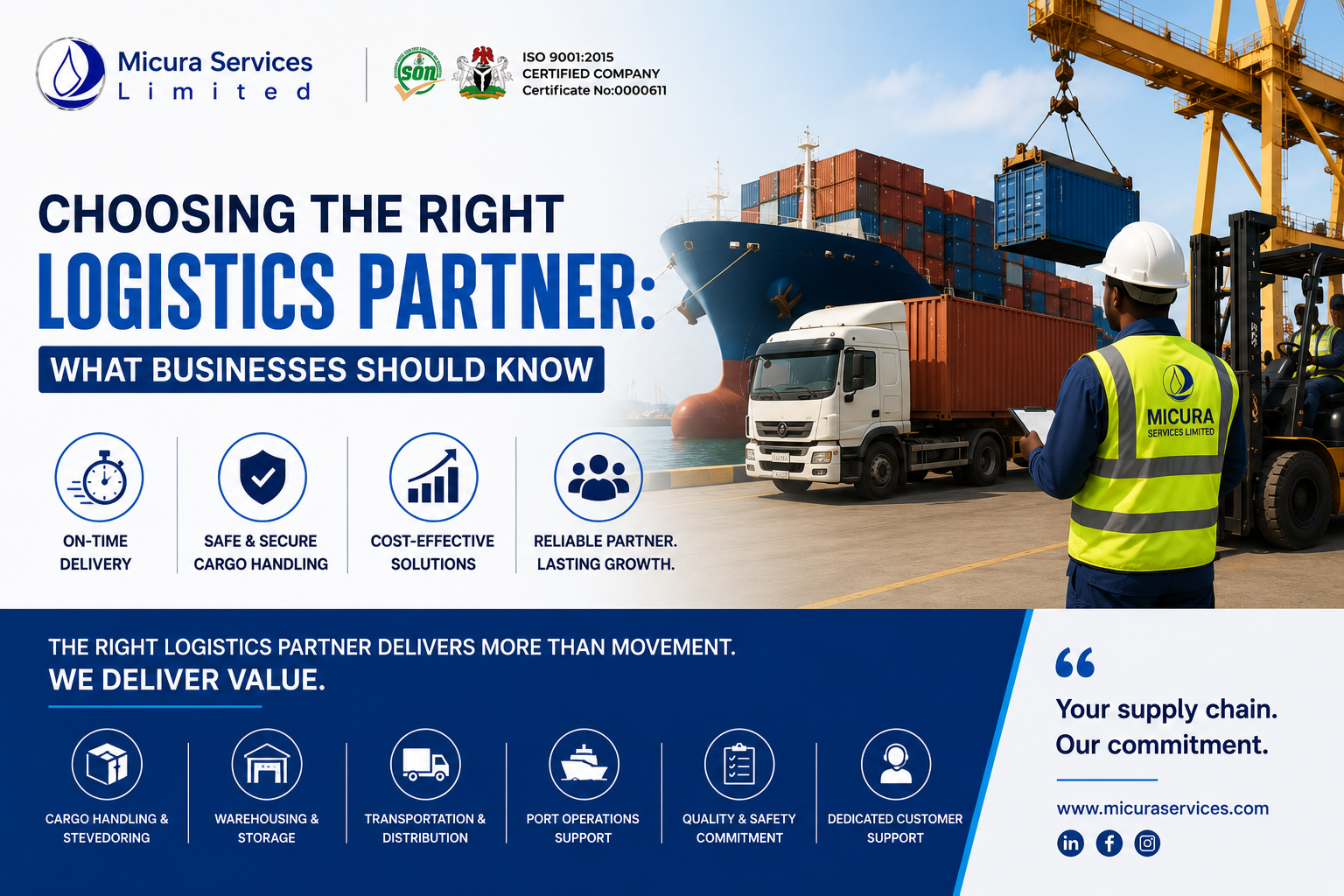
In today’s fast-paced business environment, logistics is no longer just about moving goods from one location to another. It has become a critical component of business success, directly impacting customer satisfaction, operational efficiency, and profitability.
Whether you are importing raw materials, distributing finished products, managing warehouse inventory, or coordinating cargo movement through ports, choosing the right logistics partner can make a significant difference to your business operations.
A reliable logistics provider does more than transport goods, it becomes a strategic partner that helps businesses navigate supply chain challenges, reduce costs, and meet customer expectations.
The efficiency of your supply chain often depends on the capabilities of the logistics company supporting it. An experienced logistics partner can help businesses:
- Ensure timely delivery of goods
- Improve inventory management
- Reduce transportation costs
- Minimize operational disruptions
- Enhance customer satisfaction
- Improve visibility across the supply chain
On the other hand, poor logistics support can lead to delays, damaged cargo, increased expenses, and dissatisfied customers.
Key Factors to Consider When Choosing a Logistics Partner
Industry Experience and Expertise: One of the first factors businesses should evaluate is the logistics provider’s industry experience. Different industries have unique logistics requirements. A company handling agricultural commodities may have different needs from a manufacturing firm, retail distributor, or maritime operator.
An experienced logistics partner understands industry regulations, cargo handling requirements, transportation challenges, and best practices that can help prevent costly mistakes. Businesses should look for providers with a proven track record and experience in managing similar cargo or operations.
Reliability and Service Consistency: Reliability is one of the most valuable qualities in any logistics provider. Can they consistently deliver goods on time? Do they have contingency plans for unexpected disruptions? Can they maintain service quality during peak periods? A dependable logistics partner helps businesses maintain customer trust and avoid unnecessary delays that could affect operations.
Range of Services Offered: Supply chains are becoming increasingly complex, making it beneficial to work with logistics providers that offer integrated solutions. Services may include:
- Cargo handling and stevedoring
- Warehousing and inventory management
- Transportation and distribution
- Bulk bagging services
- Freight coordination
- Port operations support
- Supply chain consulting
Working with a provider that offers multiple services can simplify operations and improve coordination throughout the logistics process.
Technology and Visibility: Modern logistics relies heavily on technology. Businesses should consider logistics providers that utilize digital tools for tracking, reporting, communication, and operational management. Technology-driven logistics solutions provide:
- Real-time shipment visibility
- Faster communication
- Improved planning
- Better decision-making
- Enhanced operational transparency
The ability to access timely and accurate information helps businesses respond quickly to changing conditions and customer demands.
Commitment to Safety and Compliance: Safety should never be compromised in logistics operations. A reputable logistics provider should maintain strong Health, Safety, and Environment (HSE) standards and comply with relevant industry regulations. Indicators of a safety-focused logistics company include:
- Regular staff training
- Use of proper safety equipment
- Documented safety procedures
- Risk assessment processes
- Regulatory compliance programs
Strong safety practices help reduce accidents, cargo damage, operational disruptions, and financial losses.
Capacity and Scalability: As businesses grow, logistics requirements often become more complex. It is important to choose a logistics partner capable of scaling operations to accommodate increased demand, seasonal fluctuations, and future expansion. A logistics provider with sufficient manpower, equipment, facilities, and operational flexibility can support long-term business growth without compromising service quality.
Customer Service and Communication: Effective communication is essential in logistics. Unexpected situations can arise at any stage of the supply chain, making responsive customer support a valuable asset. Businesses should seek logistics providers that:
- Communicate proactively
- Provide regular updates
- Respond quickly to inquiries
- Resolve issues efficiently
- Maintain transparent reporting practices
Strong communication builds trust and fosters productive long-term partnerships.
Quality Management Systems: A logistics provider’s commitment to quality often reflects the consistency of its service delivery. Organizations that operate under recognized quality management systems, such as ISO 9001:2015, demonstrate a structured approach to continuous improvement, customer satisfaction, and operational excellence. Quality-focused logistics providers are better equipped to identify inefficiencies, manage risks, and deliver reliable results.
How Micura Services Limited Supports Business Success
At Micura Services Limited, we understand that every business has unique logistics requirements. Our comprehensive logistics and maritime support services are designed to help clients move cargo efficiently, safely, and cost-effectively. Through our commitment to operational excellence, quality management, safety compliance, and customer satisfaction, we continue to support businesses across various industries with reliable logistics solutions.
Our experience in cargo handling, stevedoring, warehousing, distribution, and maritime operations enables us to provide tailored services that meet the evolving needs of our clients. By carefully evaluating experience, reliability, technology, safety standards, service offerings, and scalability, Micura services build logistics partnerships that contribute to long-term success.
One Response