
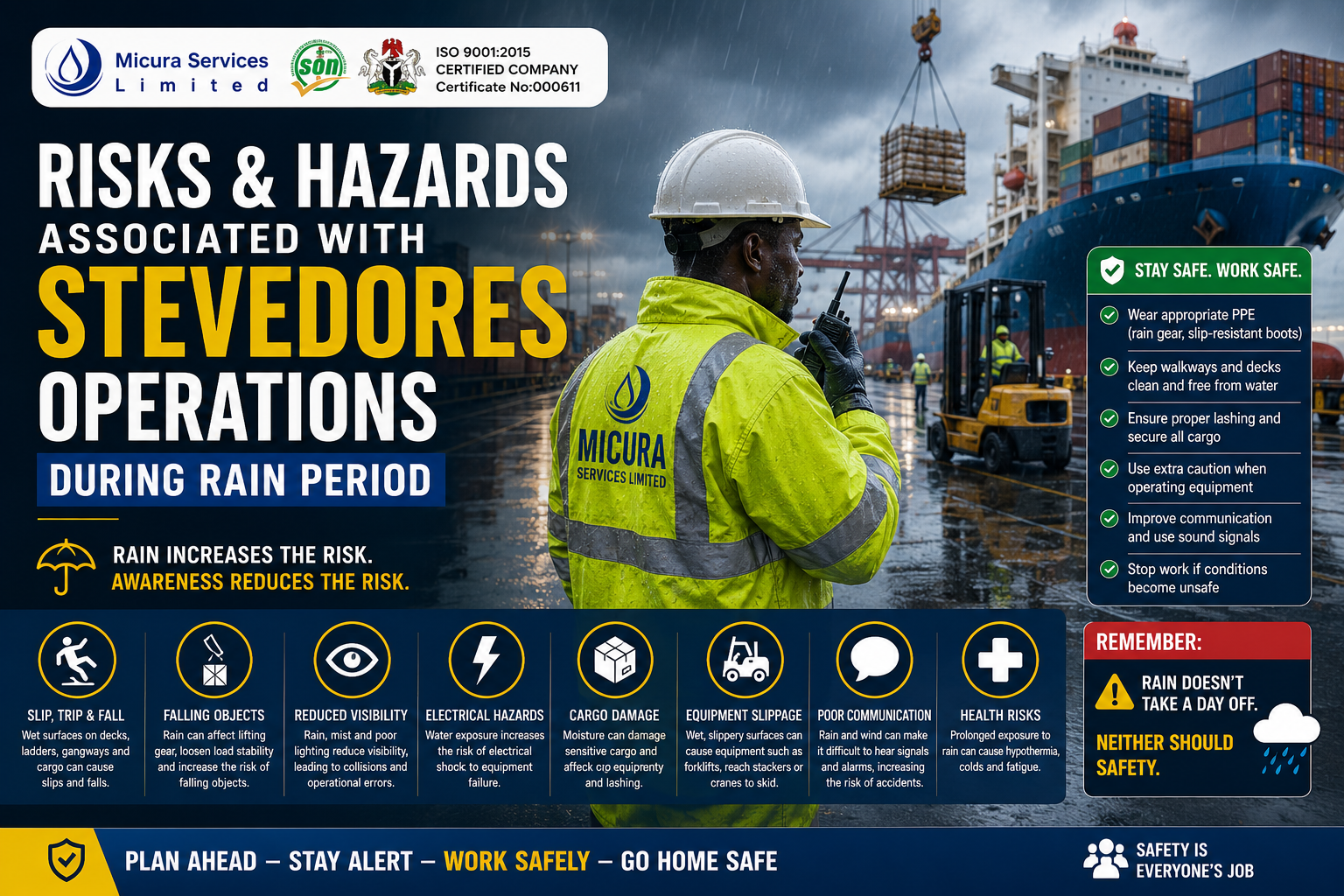
The rainy season brings welcome relief from the heat, but it also introduces additional safety challenges across ports and terminals. For companies involved in stevedoring, cargo handling, logistics, and terminal operations, wet weather demands extra caution to protect personnel, cargo, equipment, and overall operations.
At Micura Services Limited (MSL), safety is more than a policy, to us it is a daily commitment. As an ISO 9001:2015 Certified company, we recognize that maintaining safe working conditions during adverse weather is essential to operational excellence and business continuity.
Stevedoring operations often involve heavy lifting, moving equipment, elevated work areas, and constant coordination between personnel. When rain enters the equation, these activities become significantly more hazardous if proper precautions are not observed. Understanding these risks allows everyone on site to make better decisions that protect lives and ensure smooth operations.
Common Risks and Hazards During Rainy Season Operations
1. Slip, Trip and Fall Hazards
Rainwater can make decks, ladders, gangways, loading bays and walkways extremely slippery. A simple loss of footing can lead to serious injuries, downtime, and operational delays. Preventive measures include:
Wearing slip-resistant safety boots
Cleaning water accumulation promptly
Using designated walkways
Installing anti-slip surfaces where necessary
2. Falling Objects
Wet weather can affect lifting operations by reducing equipment stability and weakening the grip of lifting gear. Strong winds and rain may also affect suspended cargo. To reduce the risk:
Inspect lifting equipment before use.
Secure all cargo properly.
Observe safe lifting limits.
Keep personnel clear of suspended loads.
3. Reduced Visibility
Heavy rainfall, fog, or poor lighting can make it difficult for operators and ground personnel to see clearly. Poor visibility increases the chances of:
Equipment collisions
Personnel accidents
Incorrect cargo placement
Delayed operations
Where visibility becomes unsafe, operations should be slowed or suspended until conditions improve.
4. Electrical Hazards
Water and electricity are a dangerous combination, therefore, routine inspection of electrical equipment and proper weather protection are essential during rainy periods as rain increases the likelihood of:
Electrical shocks
Equipment malfunction
Short circuits
Power failures
5. Cargo Damage
Many cargo types are vulnerable to moisture, hence, using waterproof coverings, proper storage procedures, and efficient cargo movement helps minimize exposure; because without adequate protection, rain can lead to:
Damaged packaging
Product contamination
Rust and corrosion
Financial losses for cargo owners
6. Equipment Slippage
Forklifts, cranes, reach stackers, trucks and other heavy equipment require good traction to operate safely. Wet operating surfaces increase the risk of:
Vehicle skidding
Reduced braking efficiency
Loss of equipment control
Operators are advised to reduce speed and remain extra alert throughout rainy weather operations.
7. Communication Challenges
Rain, wind and heavy machinery can make verbal communication difficult. Using radios, hand signals and established communication protocols helps in maintaining coordination across work teams. Likewise, poor communication may result in:
Misunderstood instructions
Delayed responses
Unsafe lifting operations
Increased accident risk
8. Health Risks
At Micura Services Limited, we understand that providing appropriate rain gear, encouraging hydration, and allowing adequate rest periods contribute to employee wellbeing, as working in wet conditions for extended periods may expose employees to:
Fatigue
Cold-related illnesses
Reduced concentration
Lower productivity
Best Safety Practices During Rainy Season
Safety is everyone’s responsibility and every employee has a role to play in maintaining a safe workplace. MSL encourages all personnel to:
Wear appropriate Personal Protective Equipment (PPE), including rain gear and slip-resistant boots.
Keep work areas clean and free from standing water.
Ensure cargo is properly lashed and secured before lifting.
Operate equipment cautiously and within safe limits.
Maintain clear communication throughout every operation.
Report unsafe conditions immediately.
Stop work whenever weather conditions become unsafe.
Rainy weather should never be viewed as routine. Instead, it should serve as a reminder to remain vigilant, follow established safety procedures, and look out for one another. Our commitment to safety at Micura Services Limited enables us to continue delivering reliable stevedoring, logistics, warehousing, and terminal support services while protecting our workforce and our clients’ cargo.
As the rainy season continues, let’s all remember to plan ahead, stay alert, and work safely, so everyone gets to go home safely.