
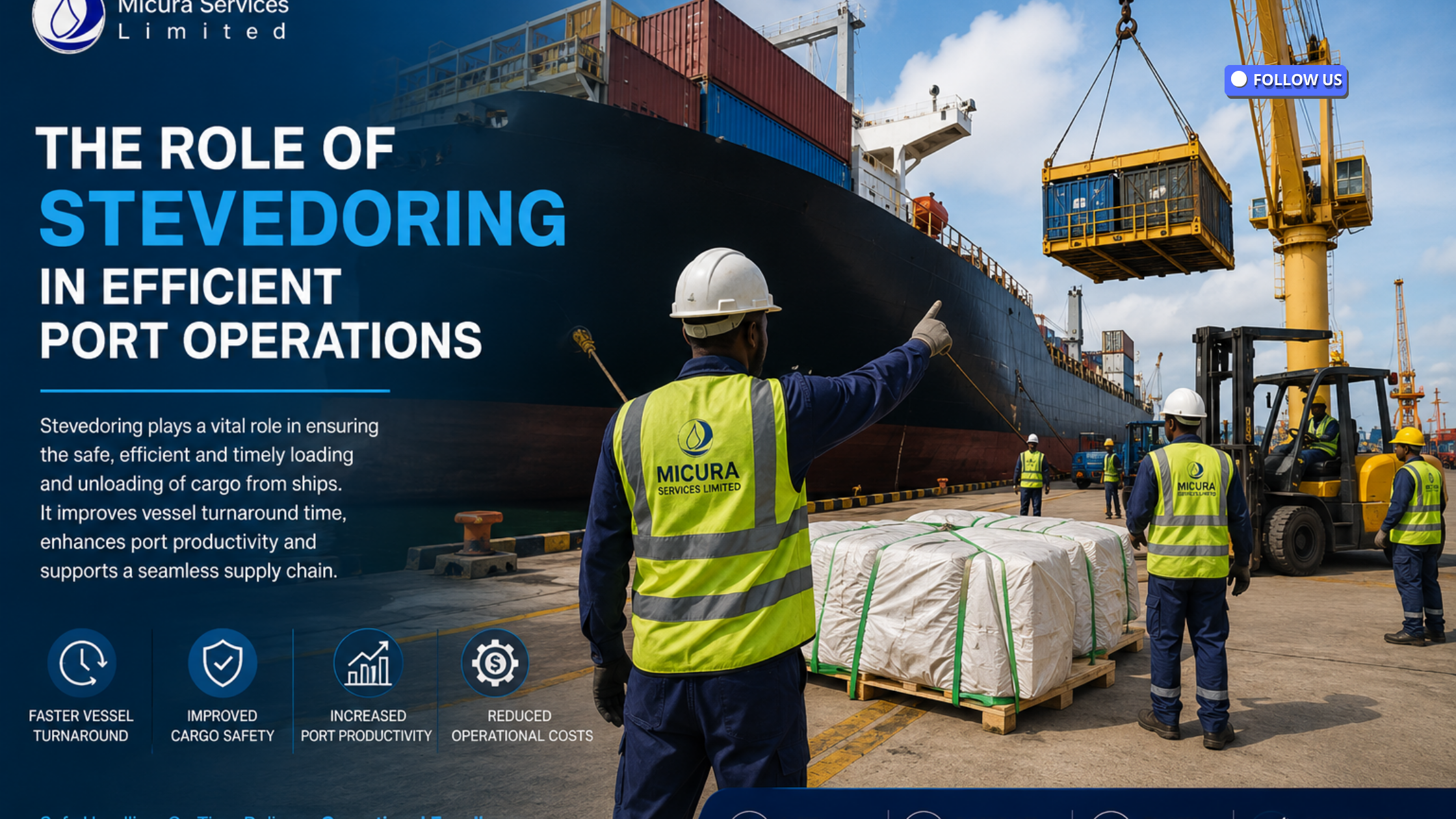
The maritime industry serves as the backbone of international trade, facilitating the movement of goods across continents and supporting economic growth worldwide. At the heart of every successful port operation lies a critical service known as stevedoring.
From the moment a vessel arrives at port until cargo is safely discharged or loaded for its next journey, stevedoring operations play a vital role in ensuring efficiency, safety, and productivity throughout the supply chain.
What is Stevedoring?
Stevedoring refers to the loading and unloading of cargo from ships at ports and terminals. It involves the coordination of skilled personnel, specialized equipment, and operational procedures required to move cargo safely and efficiently between vessels and shore facilities.
Stevedoring services cover a wide range of cargo types, including:
- Bulk cargo
- Containerized cargo
- Bagged commodities
- General cargo
- Project cargo
- Heavy equipment and machinery
The effectiveness of these operations directly impacts vessel turnaround time, port productivity, and overall supply chain performance.
Every hour a vessel spends at berth comes at a cost. Delays in cargo handling can lead to increased operational expenses, congestion at terminals, and disruptions throughout the logistics chain.
Professional stevedoring helps ensure that cargo operations are completed safely, accurately, and within scheduled timelines.
Why Does Stevedoring Matters?
- Faster Vessel Turnaround Time
- Improved Cargo Safety
- Increased Port Productivity
- Reduced Operational Costs
Faster Vessel Turnaround Time: One of the most important measures of port efficiency is vessel turnaround time. which is the period between a vessel’s arrival and departure. Efficient stevedoring operations reduce loading and discharge times, enabling vessels to return to service faster. This not only benefits shipping companies but also helps ports maximize berth utilization and accommodate more vessel traffic.
Improved Cargo Safety: Cargo handling presents numerous operational risks. Improper loading, poor stacking methods, or inadequate handling procedures can result in cargo damage, financial losses, and safety incidents. Professional stevedoring teams are trained to follow industry best practices, ensuring cargo is handled carefully and securely throughout the operation.
Increased Port Productivity: Efficient cargo handling contributes significantly to overall port productivity. Well-organized stevedoring operations minimize delays, improve workflow coordination, and optimize the use of equipment and manpower. As ports become busier and global trade volumes continue to increase, productivity remains a key competitive advantage.
Reduced Operational Costs: Operational delays often translate into higher costs for shipping companies, terminal operators, and cargo owners. By streamlining loading and discharge activities, stevedoring services help reduce:
- Demurrage costs
- Vessel waiting time
- Equipment downtime
- Labour inefficiencies
- Cargo damage expenses
The Importance of Skilled Stevedores
Successful stevedoring operations depend heavily on the expertise of the workforce. Stevedores must possess knowledge of:
- Cargo handling techniques
- Equipment operation
- Safety procedures
- Load distribution principles
- Risk management practices
- Environmental compliance requirements
Continuous training and development ensure that personnel remain equipped to handle the evolving demands of modern port operations. Port environments present numerous hazards, including heavy machinery, moving cargo, vessel operations, and challenging weather conditions. A strong safety culture is therefore essential to successful stevedoring operations.
Key safety measures include:
- Personal Protective Equipment (PPE) compliance
- Hazard identification and risk assessment
- Equipment inspections and maintenance
- Safe lifting procedures
- Emergency preparedness training
- Continuous HSE awareness programs
Organizations that prioritize safety not only protect their workforce but also improve operational reliability and client confidence. The maritime industry is also increasingly embracing technology to enhance efficiency and transparency. Modern stevedoring operations now benefit from:
- Digital cargo tracking systems
- Real-time operational reporting
- Equipment monitoring solutions
- Automated scheduling tools
- Data-driven performance management
These innovations help improve decision-making, reduce delays, and support more efficient cargo movement across ports and terminals.
Micura Services Limited’s Commitment to Operational Excellence
At Micura Services Limited, we understand the critical role stevedoring plays in maintaining efficient and reliable port operations. That is why our experienced teams are committed to delivering safe, efficient, and professional cargo handling services while upholding the highest standards of quality, safety, and operational excellence.
Through continuous staff development, adherence to industry best practices, and a strong commitment to customer satisfaction, we remain dedicated to supporting the seamless movement of cargo across Nigeria’s maritime sector.
Stevedoring is far more than simply loading and unloading cargo. It is a specialized service that directly influences vessel turnaround times, port productivity, cargo safety, and overall supply chain performance.
As global trade continues to grow, the importance of professional and efficient stevedoring services will only become more significant. Organizations that invest in skilled personnel, safety culture, and operational excellence are better positioned to meet the demands of a rapidly evolving maritime industry.
At Micura Services Limited, we remain proud to contribute to the efficiency and growth of Nigeria’s port operations through dependable stevedoring and maritime support services.